
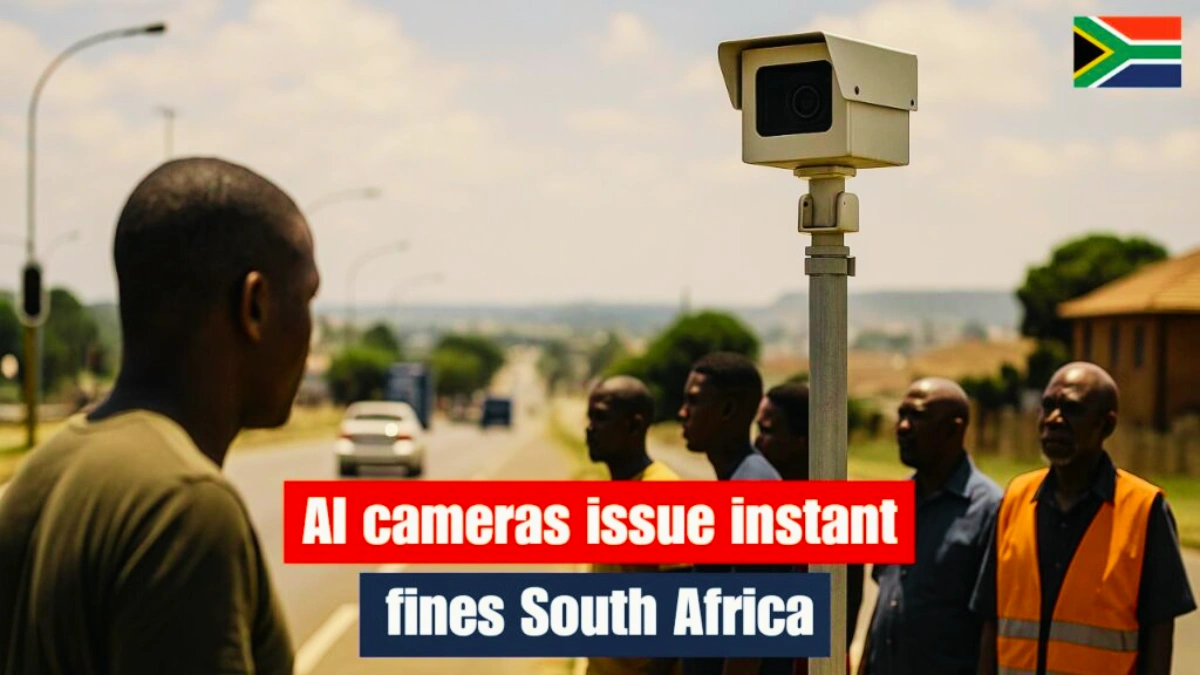
South Africa’s New Road Safety Law: In December 2025, South Africa will introduce a significant change in road safety enforcement with the roll-out of AI-powered cameras. Under the new AARTO (Administrative Adjudication of Road Traffic Offences) Act, automated systems will issue fines instantly for traffic violations like speeding and running red lights. This marks a shift from manual, officer-based enforcement to a more efficient, digital approach, designed to improve road safety across the country.
How the New Road Safety Law Will Work
South Africa’s New Road Safety Law- The new law will enable AI cameras to monitor traffic violations in real-time. These cameras will capture violations like speeding and running red lights without the need for manual intervention from law enforcement officers. The instant fines will be sent electronically to offenders via SMS or email. Fines can then be paid online, with discounts available for prompt payment.

Key Features of the New Road Safety Law
| Change | How It Works | Impact on Drivers |
|---|---|---|
| Automated AI Cameras | No-flash, infrared cameras will capture violations like speeding and red-light running. | Violations will be recorded instantly, reducing human error. |
| Electronic Fines | Fines will be sent electronically, bypassing the need for a physical summons. | Instant fine delivery and a more efficient process. |
| Demerit Point System | Accumulation of points for multiple violations could lead to license suspension. | Repeat offenders could face licence suspension or further penalties. |
| Early Payment Discounts | Fines paid within a specified time period will be eligible for a discount. | Incentive for quick payments and avoidance of higher fees. |
| Fleet and Business Compliance | Businesses with fleets will be held liable for any traffic violations. | Companies must monitor fleet vehicles to avoid penalties. |
What Drivers Can Expect
With the introduction of AI-powered cameras and a fully digital fine system, drivers will no longer have the option to argue their case in a physical courtroom. Instead, they will receive instant notifications via email or SMS, detailing the violation, the fine, and how to pay it.
The new law introduces a demerit point system, where repeated traffic violations will result in points being added to a driver’s record. Once a certain threshold is reached, drivers could face consequences such as the suspension of their driver’s license. This system is meant to deter bad driving behavior by making penalties more immediate and consistent.

Benefits of AI-Powered Enforcement
The main benefit of AI cameras is their ability to ensure continuous, 24/7 monitoring of traffic violations without human intervention. This ensures that violations are captured and punished swiftly, creating an overall safer driving environment. The system aims to eliminate inefficiencies and delays found in the traditional traffic fine system, ultimately speeding up the enforcement process.
Another key benefit is the reduction of corruption. Automated systems leave little room for human error, and drivers cannot “negotiate” or bribe their way out of fines, which can sometimes occur with manual enforcement.

What Drivers Need to Do to Prepare
To adapt to these changes, drivers must take a few steps to ensure they are in full compliance with the new road safety laws:
- Update Vehicle Registration: Ensure your vehicle registration and license details are up-to-date to receive fines electronically.
- Pay Fines Promptly: Paying fines quickly can save money due to early-payment discounts. Make sure to check your email or SMS for notifications.
- Be Aware of Traffic Laws: With AI cameras monitoring roads, it’s important to stay compliant with all traffic laws, especially speed limits and red-light rules.
- Monitor Fleet Vehicles: Businesses with fleets should ensure their vehicles follow road rules to avoid being penalized.
How This Law Will Improve Road Safety
South Africa’s new road safety law aims to reduce traffic accidents by implementing stricter enforcement. The AARTO system offers quicker responses to violations, creating a more efficient and accountable system. This should discourage reckless driving behaviors, such as speeding and running red lights, which are major contributors to accidents.

With AI technology, the government can track violations more accurately and provide real-time enforcement, helping reduce road fatalities and injuries over time.
Conclusion: The new road safety law, set to begin in December 2025, marks a bold move toward more efficient, technology-driven traffic enforcement in South Africa. With AI cameras issuing instant fines and the introduction of the demerit point system, drivers will need to stay mindful of road rules to avoid penalties. These changes are expected to improve road safety across the country by providing quicker, more accurate enforcement.

Disclaimer: This article provides an overview of the changes introduced by South Africa’s new road safety law. Information shared here is subject to change based on further developments or updates from government authorities. For the most current and official information, always consult the South African Department of Transport or local authorities.