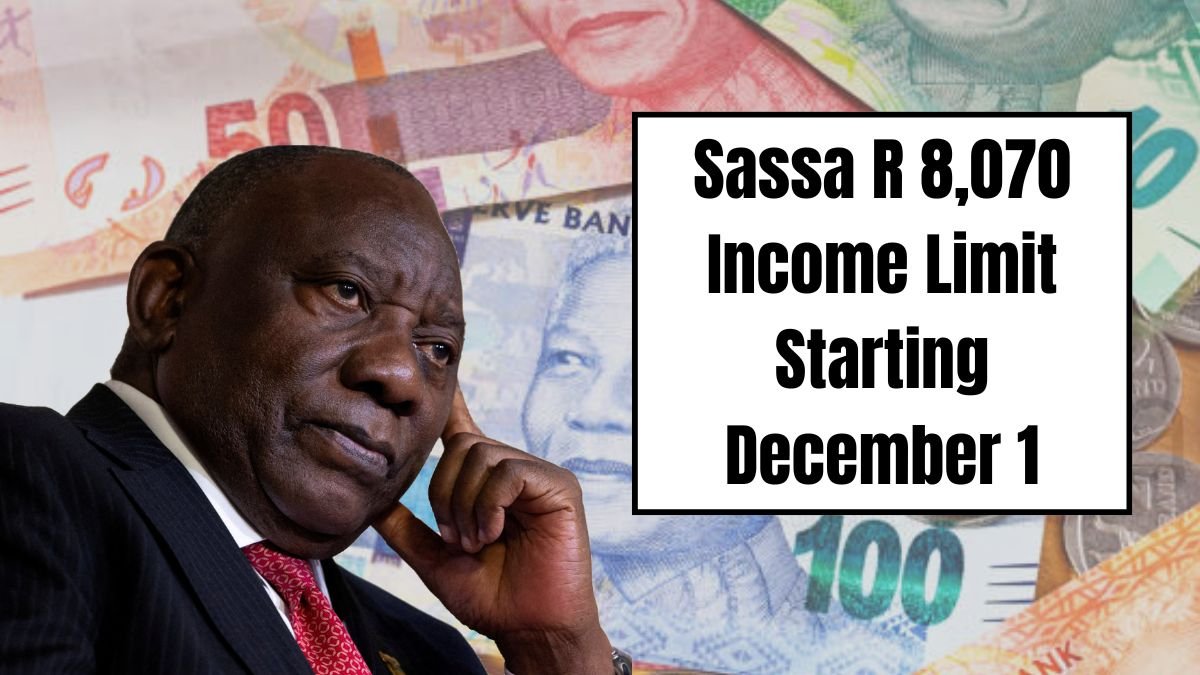
A major update from SASSA has created widespread attention as thousands of beneficiaries may soon lose access to their monthly grants. Starting December 1, SASSA will enforce a strict new income rule that disqualifies any applicant or beneficiary earning above the revised R8,070 income threshold. This update aims to ensure that financial support reaches individuals who genuinely need it, but it also means many households must now re-evaluate their income eligibility to avoid sudden grant suspension.
What the New R8,070 Income Rule Means
Under the updated rule, SASSA will now monitor all beneficiary income levels more closely. Anyone receiving more than R8,070 per month will automatically be removed from the grant system. This applies to both new applicants and existing beneficiaries. The change impacts multiple grant categories and is part of SASSA’s ongoing effort to improve fairness and reduce fraudulent claims.

Why SASSA Implemented the New Limit
SASSA has stated that rising demand for financial assistance and limited budget allocations have driven the need for stricter eligibility checks. The R8,070 limit ensures that support is directed to low-income individuals and vulnerable families. Officials expect this update to reduce misuse of grant benefits and free up funds for those in genuine financial distress.
Impact on Existing Beneficiaries
The new rule may affect thousands of South Africans relying on monthly grants. Those whose income recently increased, even slightly above the threshold, risk immediate disqualification. SASSA will use updated income verification systems, including bank checks and digital audits, to identify non-eligible recipients more efficiently. Beneficiaries are encouraged to track any recent income changes to avoid sudden suspension.

Key Details of the Updated Income Rule
Below is the only bullet-point list included in the article.
- Income exceeding R8,070 per month results in automatic disqualification
- Applies to all existing and new SASSA grant applicants
- Effective from December 1
- Part of SASSA’s fraud-prevention and fairness strategy
- Includes digital income verification and bank monitoring
- Affects multiple grant categories depending on individual cases
Who Will Be Affected the Most
The groups most impacted are those with fluctuating income or part-time work, where monthly pay varies. Beneficiaries who recently took up new jobs or freelance work may unintentionally cross the income limit and risk losing their grants. Households supported by multiple earners may also fall above the threshold and face immediate removal.

What Beneficiaries Should Do Now
Beneficiaries are advised to review their income records, bank statements, and employment documents. Anyone nearing the R8,070 mark should prepare for stricter verification processes. If a beneficiary believes their income has been incorrectly assessed, they can submit updated documents or appeal the decision to restore eligibility.
Expected Changes in Grant Access
As SASSA enforces the new rule, grant approvals are likely to decrease while ongoing beneficiaries face increased scrutiny. This may lead to faster processing for those who qualify and quicker rejection for those above the income threshold. The rule aims to streamline the distribution system and prioritize the most financially vulnerable.
Summary Table of the New SASSA Income Rule
| Aspect | Details |
|---|---|
| New Income Limit | R8,070 per month |
| Effective Date | December 1 |
| Who Is Affected | Both new and existing beneficiaries |
| Verification Method | Bank checks and digital audits |
| Outcome | Disqualification if income exceeds limit |
Conclusion
The new income threshold marks one of SASSA’s most significant rule changes in recent years. While the R8,070 limit strengthens the fairness of the grant system, it also puts many beneficiaries at risk of losing their monthly support. Staying informed and keeping income records updated is now more important than ever for anyone depending on SASSA grants.
Disclaimer: Information may change based on official updates or policy adjustments.